

Sell My Business in Austin
From your first valuation to the closing table, Bridge runs the sale so you can keep running the business you built while it is quietly on the market.
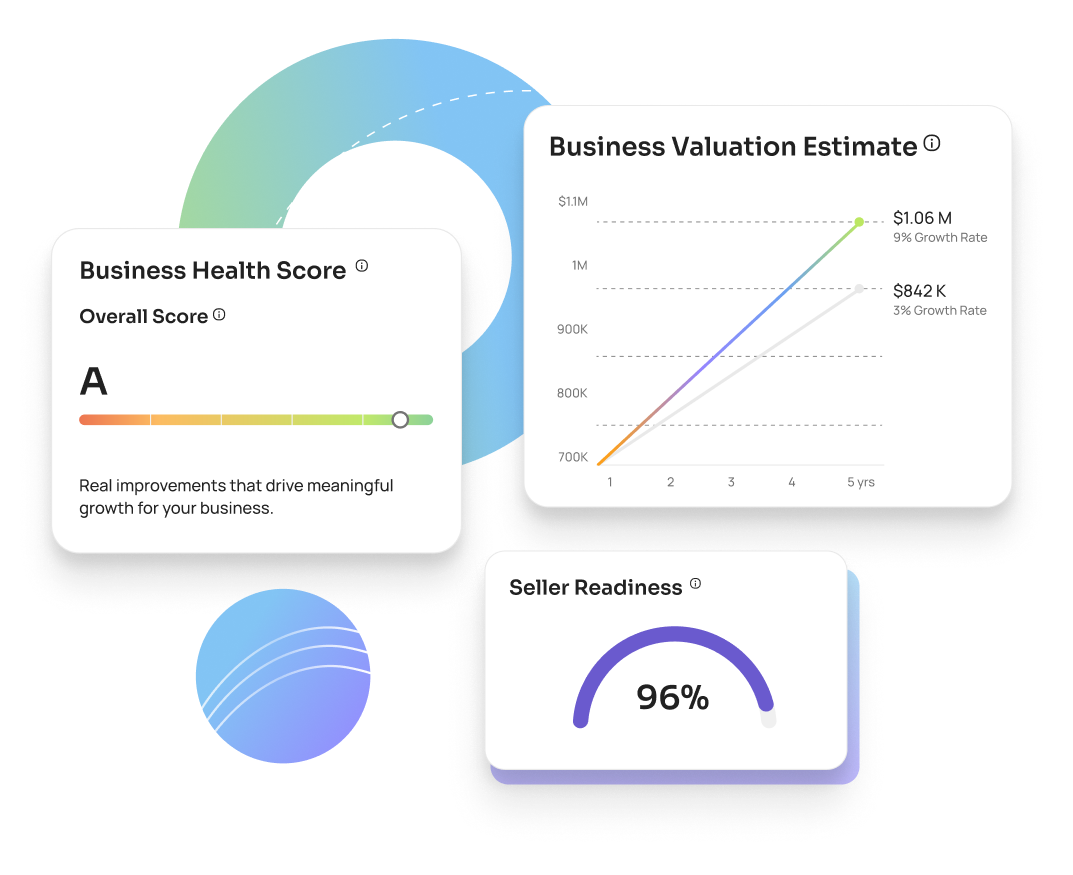
Austin trades fewer businesses than the big coastal metros, but the ones that change hands are larger and more profitable than the national norm, and they sell faster. A strong market is not the same as a good outcome. What you actually get comes down to how well the business is prepared, how quietly it reaches the market, and whether you know your number before the first buyer asks for it. Bridge guides Central Texas owners through the entire process and starts you off with a free exit playbook that shows where you stand today.
300+
Successful exits
$1B+
in M&A transactions
150+
Years of experience
Schedule Your Free Consultation
Talk to a Bridge advisor and get a clear picture of where your business stands. Learn what it takes to value, grow, or exit with confidence.
Trusted by Small Businesses












The three questions every owner asks before selling
Owners in Austin arrive at the same three, usually in the same order, and Bridge is built to answer all of them. What is my business worth? A certified valuation gives you a number built from what comparable businesses actually closed at, rather than a multiple someone quoted you over coffee. Is it actually sellable? A readiness review shows how the business holds up without you in the building, and where a buyer will push back before they say it out loud. How do I sell it? One Bridge advisor carries you from that first number to the closing table, so you are never guessing what happens next.
How Bridge runs your sale
Once you are ready, your advisor takes over the parts that eat your time and create the most risk, so running the business stays your job.

Find the right buyer
Brings qualified buyers. Your business goes in front of vetted individual buyers, search funds, and regional acquirers, and each type values it differently.

Maximize sale price
Pushes for the best price. Offers get measured against what comparable Austin businesses actually closed at, so the negotiation runs on evidence rather than instinct.

Sell on your timeline
Keeps it on your timeline. A fast market creates urgency, and urgency is where owners give away terms. At a median 153 days, Austin moves quickly enough that the pressure is real. You still move when you are ready, not when the market is loud.

Keep things confidential
Protects what you built. Buyers see the business under a confidentiality agreement, so your staff, your customers and your competitors hear it from you rather than from the market.

Navigate legal & financial complexity
Manages the hard parts. Letter of intent, diligence requests, attorney and accountant coordination and the closing checklist all sit with your advisor, not on your desk.

Exit with no regret
Succession, tax planning and what you actually do the day after closing get settled with the same team, before the money moves.
THE PROCESS
How Bridge Works
Our straightforward process helps you prepare for a successful business exit without the guesswork.
1. Tell us about your business
Share key details in a simple process that takes about 30 minutes.
2. Get your valuation in 5 days
Receive a certified valuation that banks, buyers, and partners will accept.
3. Build your growth roadmap
Get a clear plan to increase your business value before selling.
4. Exit on your terms
Transition your business with confidence, clarity, and maximum value.
Owner Stories
From first call to closing
A sale runs in four stages. You always know which stage you are in, and what has to be true before the next one begins.
1. Preparation
Prepare. Set the value, clean up the financials and fix the things a buyer would otherwise use to discount you.
2. Marketing and outreach
Take it to market. Your business is presented confidentially to buyers in Texas and nationally, because the right acquirer is often not the one down the road.
3. Buyer selection
Choose your buyer. Weigh offers on price, structure and what happens to your people, then negotiate the letter of intent.
4. Due diligence and closing
Close. Work through diligence, buyer financing and the legal steps to a clean handover.
What the Austin market looks like right now
Austin is a seller-friendly market, and the numbers behind it are unusually consistent. About 100 completed sales were reported across the Austin and Round Rock metro in 2025, and roughly 347 businesses were actively listed across the metro in the second quarter of 2026.
Volume is only part of the picture. Austin businesses sell for more than the national norm across the board. The median sale price here ran about $425,000 in 2025 against a national median of $350,000, on median revenue near $754,000 and median cash flow around $194,300, both ahead of the national figures of $703,000 and $158,950. That combination, modest deal volume and unusually strong economics, is its own kind of market. Fewer businesses trade here than in the big coastal metros, but the ones that do are worth more.
For an owner, a thin market cuts both ways: less noise to compete with, but fewer second chances if the first serious buyer walks. Austin businesses also move quickly, at a median 153 days on the market, and sellers closed at roughly 92 percent of their asking price. Both of those reward preparation. The listings that stall here are usually the ones that went to market before the financials and the operating story were ready. The Austin listings that sell are the ones that arrive with clean financials, a defensible asking price, and answers ready for the questions a buyer will ask in diligence.
100
Reported sales in the metro in 2025
$425,000
Median sale price, above the national median
347
Businesses listed for sale in Q2 2026
What buyers in Austin look for
Buyers look for a business that does not need you in the building every day to keep running; solid, predictable margins, with a 20% cash-flow margin as a healthy benchmark; clean books that make diligence fast instead of painful; and steady, spread-out revenue rather than reliance on one or two big accounts.

A business that runs without you
With only a few hundred businesses listed at any time, Austin buyers can afford to be selective, and the company that runs without its owner is the one they shortlist. Owner dependence is the most common reason an Austin listing sits.

Cash flow a lender can underwrite
Median cash flow on Austin sales ran about $194,300 in 2025. Buyers and SBA lenders both work backwards from cash flow, which is what sets the ceiling on any offer you receive.

Financials that tie out
Three years of statements that reconcile to the tax returns. Books that need explaining are the most common reason a Central Texas deal slows down or falls apart in diligence.

No single customer carrying the revenue
When one client is a large share of revenue, a buyer prices the risk that the client leaves when you do. Customer concentration is a discount, not a rounding error.

Revenue that repeats
Contracted or repeat revenue is worth more per dollar than project work, because a buyer can forecast it and a lender can underwrite it.

Systems written down, team in place
Written processes and a team that makes decisions without you let a buyer picture running the business on day one. In a market this busy, that is often the difference between an offer and a pass.
Raise your value before you sell
If you have time before you exit, the fastest way to a bigger number is to grow your value first. Bridge offers a membership program, the SMB Playbook, built to make an owner-dependent business systemized, profitable, and ready for a new owner. It follows four steps.
Membership starts at $300 per month. See how Bridge can help you scale your business and walk into a sale from a position of strength.

Know your number first
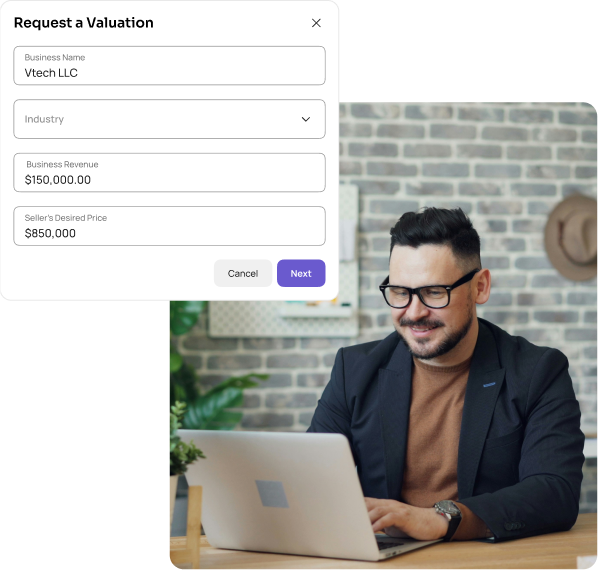
Price is where most sales are won or lost. Set it too high and the business sits; too low and you leave money behind. A certified valuation grounds your asking price in real comparables and your actual earnings, so you negotiate from evidence instead of emotion. It is a flat $1,999 and arrives in 3 to 5 business days.
Serving Austin and Central Texas
Bridge is headquartered in Lehi, Utah, and works with business owners across the United States, including Austin, Round Rock, Cedar Park, Georgetown, San Marcos and the wider Central Texas region. Central Texas draws a steady flow of buyers, including individuals relocating from higher-cost states and search funds hunting for profitable operators, which is part of why businesses here clear the market faster than the national median. Most of those owners will sell to a financed buyer, and SBA rules cap the price at what an independent valuation supports. Your dedicated advisor meets with you by phone and video, so you get the same hands-on guidance without leaving your office. To talk with someone about your business, schedule a free consultation.
See where you stand in minutes. Get your free exit playbook, or talk to a Bridge advisor about selling.