
Why Recurring Revenue Is Worth More Than the Same Dollar of One-Time Revenue
Published 8/20/2026
Quick answer
A dollar of contracted, recurring revenue is worth more at sale than a dollar of one-time revenue, because a buyer is paying for future earnings and recurring revenue is the most credible evidence those earnings will arrive. The profit line can be identical in both businesses. What changes is the multiple applied to it, and that difference compounds into a large gap in price.
Key takeaways
- Buyers pay for predictability. Recurring revenue is predictability you can document.
- The same earnings can carry very different multiples depending on revenue quality.
- Retention rate matters as much as the recurring label. A contract customers leave is not recurring.
- Most businesses can move some portion of revenue toward repeat or contracted, even in project-based industries.
What buyers are really buying
A buyer is not purchasing last year. They are purchasing next year and the years after it, and paying for that today. So every question they ask is a version of the same question: how confident can I be that this keeps happening once the current owner is gone?
Recurring revenue answers that question better than anything else on the financials. A signed contract that renews, a monitored account, a maintenance agreement, a subscription. These arrive whether or not the new owner is any good at winning work in their first year, and that is precisely why they are valuable.
One-time revenue asks the buyer to assume the sales engine keeps running. That may be entirely reasonable, but assumption is exactly what a multiple prices.
The spectrum, from least to most valuable
- One-off project work. Every dollar has to be won again. Highest sales cost, lowest visibility.
- Repeat but uncontracted. Customers habitually return. Better, but nothing obliges them to.
- Contracted with a term. An annual agreement with a renewal date. Now there is paper behind the revenue.
- Auto-renewing with high retention. The customer has to act to leave. This is the version buyers pay a premium for.
- Contracted and growing. Existing customers spend more each year. The best of both.
Most small businesses sit somewhere on this spectrum rather than at one end of it. Moving even a third of revenue up one step changes how the whole business reads.
Why predictability is worth paying for
There is a practical reason behind the premium, and it is not sentiment. Most small business purchases are financed. The buyer takes on debt with fixed monthly payments that begin immediately, whether or not the phone rings.
Recurring revenue makes those payments safe. A lender looking at a contracted book can see coverage. A lender looking at project revenue is relying on a new owner winning work in an industry they may have just entered.
That is why recurring revenue does not only raise the multiple. It widens the pool of buyers who can get financed at your asking price, and more competition for the business tends to improve both price and terms.
The three numbers to know
- Recurring share. What percentage of last year’s revenue was contracted or genuinely repeating?
- Retention. Of the customers you had twelve months ago, how many are still with you?
- Net revenue retention. Counting expansion and downgrades, is that same cohort spending more or less than a year ago?
If net revenue retention is above 100 percent, the base grows without any new customers at all. That is the strongest revenue story a small business can tell, and very few owners can produce the figure on request.
Rough benchmarks: retention above 90 percent with contracts running a year or more sits in the range buyers pay a full premium for. Below 80 percent, or net revenue retention under 95 percent, the premium starts to erode no matter how the revenue is labeled.

The math, with real numbers
Two commercial cleaning companies. Both do $1.4 million in revenue and both produce $280,000 in adjusted earnings.
Company A works job to job. Offices call when they need a deep clean, work is quoted individually, and roughly 70 percent of revenue has to be re-won each year. At a 2.5x multiple, the business is worth about $700,000.
Company B has 38 buildings on annual contracts that auto-renew, with about 92 percent retention. Revenue next January is largely knowable in December. At a 4x multiple, the business is worth about $1.12 million.
Same revenue, same profit, a difference of roughly $420,000. Nothing about the operational quality of Company A is worse. The buyer simply has more to assume.
Recurring in name only
The label is not the point. Buyers test whether the revenue actually recurs, and a few things collapse the premium quickly.
- Weak retention. Buyers start discounting the premium once annual customer retention slips below about 80 percent, and churn above 10 percent a year compresses the multiple regardless of what the contracts say.
- Contracts that do not transfer. If agreements terminate on a change of ownership, they protect nothing after the sale.
- Month-to-month with no notice period. Cancellable on a whim is closer to repeat revenue than contracted.
- Concentrated recurring revenue. Ten contracts where one is 40 percent of the book carries its own problem.
Before you claim a recurring revenue premium, know your retention rate, your average contract length, and whether your agreements survive an assignment. Those three numbers are what a buyer will ask for.
How to move revenue up the spectrum
Almost every business has some component that can be contracted, even where the core work is project-based.
Service businesses can attach a maintenance or monitoring agreement to the original installation. Professional firms can convert ad hoc work into a monthly retainer covering a defined scope. Retail and trade businesses can build membership or priority-service plans. Equipment businesses can sell consumables, parts, and scheduled servicing alongside the machine.
The move that pays fastest is usually converting existing happy customers rather than chasing new ones. They already trust you, and a modest annual agreement is an easy conversation. A year of that changes the revenue profile a buyer sees.
Recurring revenue is one of the strongest levers on the multiple, but it is not the only one. the five value drivers buyers pay for covers the rest, and valuation multiples by industry shows how they combine to place you inside your industry range.
Start where the friction is lowest
If this is new ground, do not redesign the business model. Pick one offer, price it simply, and take it to twenty existing customers.
A twelve-month agreement at a modest monthly fee, covering something you already do for those customers informally, will tell you within a month whether the idea has legs. If fifteen of twenty say yes, you have a product. If three say yes, the offer needs work, and you have learned that cheaply.
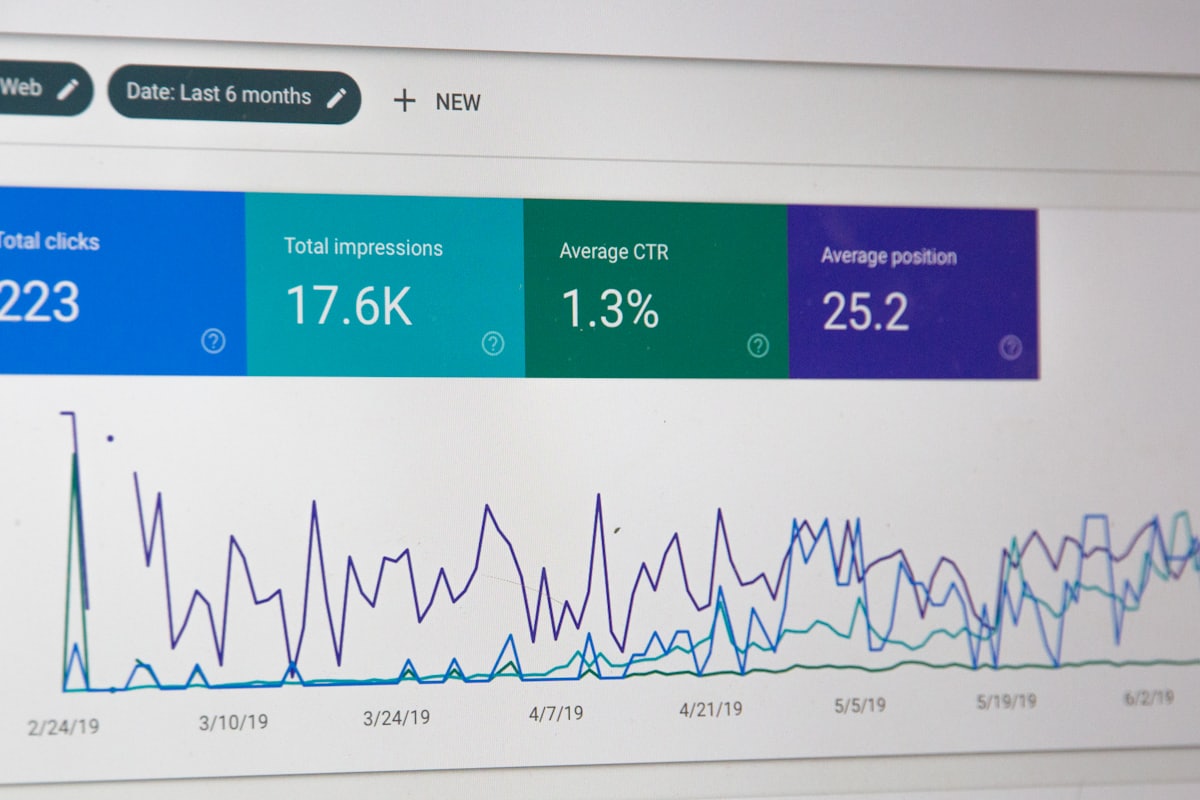
Twelve months of that discipline is usually enough to change the shape of your revenue chart, and the revenue chart is one of the first things a buyer looks at.
What recurring revenue does before you sell
The valuation argument is the headline, but recurring revenue changes how the business runs long before anyone is thinking about an exit.
It flattens cash flow, which is the single biggest operational relief most small business owners can give themselves. Payroll stops being a monthly negotiation with the calendar. It also lets you plan hiring against known revenue rather than optimism, and it lowers the cost of every sale after the first one, because retaining a customer costs a fraction of winning one.
There is a quieter benefit too. When a meaningful share of revenue arrives without being chased, the owner gets time back, and time is what most owners need in order to work on the other value drivers at all.
Pricing the agreement
The most common mistake is pricing the recurring offer too low, on the theory that a small number is easier to say yes to.
- Price it against the value delivered, not against the hours it costs you.
- Build in an annual increase, even a modest one. Buyers notice a base that grows on its own.
- Offer a discount for annual prepayment rather than discounting the rate itself.
- Keep the scope tight and written down, so the agreement does not quietly expand into unpaid work.
An agreement that loses money is worse than no agreement. It creates an obligation, consumes capacity, and a buyer will spot the margin drag in the numbers.
What to fix in your contracts now
If you already have agreements in place, they are worth reading with a buyer’s eye, because most were drafted with no thought of a sale.
Look for assignment and change-of-control language first. An agreement that terminates when ownership changes protects nothing after closing, and this is one of the first things a buyer’s attorney checks. Where you can, amend to allow assignment to a successor.
Then check renewal mechanics. Automatic renewal with a notice period is materially stronger than an agreement that lapses unless someone signs again. Check that termination requires reasonable notice rather than allowing an exit at will. And confirm the paperwork actually exists, signed, for every account you would describe as contracted.
Fixing this takes a conversation with your attorney and a round of amendments at renewal. It costs very little and it is the difference between a recurring base a buyer will pay for and one they will discount.
Find out what you’re worth.
Frequently asked questions
Why is recurring revenue worth more to a buyer?
Because a buyer is paying today for earnings that arrive in future years. Contracted, renewing revenue is documented evidence that those earnings will continue after the owner leaves, so the buyer applies a higher multiple to the same profit.
How much does recurring revenue increase business value?
It varies by industry and by how strong the recurring base is. In the lower middle market the premium commonly runs about one to two turns of earnings, so a business valued at 2.5 to 3.5 times as project work might carry 4 to 5.5 times once the revenue is contracted and renewing. On $280,000 of earnings, a single turn is $280,000 of value.
What counts as recurring revenue?
Contracted income that renews on a defined term, such as maintenance agreements, monitoring, subscriptions, and retainers. Repeat customers who return by habit are better than one-off work but are not treated the same as contracted revenue.
Do my contracts transfer when I sell the business?
It depends on the wording. Many agreements contain change-of-control or assignment clauses that let the customer terminate when ownership changes. This is worth checking well before you go to market, because it is exactly what a buyer’s attorney looks for.
Can a project-based business build recurring revenue?
Usually yes, by attaching a service, maintenance, or monitoring agreement to work already being delivered. Converting existing satisfied customers is normally faster than acquiring new recurring customers.
See what your revenue mix is worth
Want to know your SDE, EBITDA, and value? Get a free estimate, or request a certified valuation from Bridge.
About Bridge. Bridge helps small business owners value, scale, and exit with confidence. Certified valuations are prepared by ABV and AICPA credentialed experts, delivered for a flat $1,999 in 3 to 5 business days, and are SBA-compliant. The team has served 300+ businesses and supported more than $1B in M&A transactions. Learn more at bridge.financial.
This article is educational and not financial, legal, or tax advice. For a number specific to your business, request a certified valuation.